

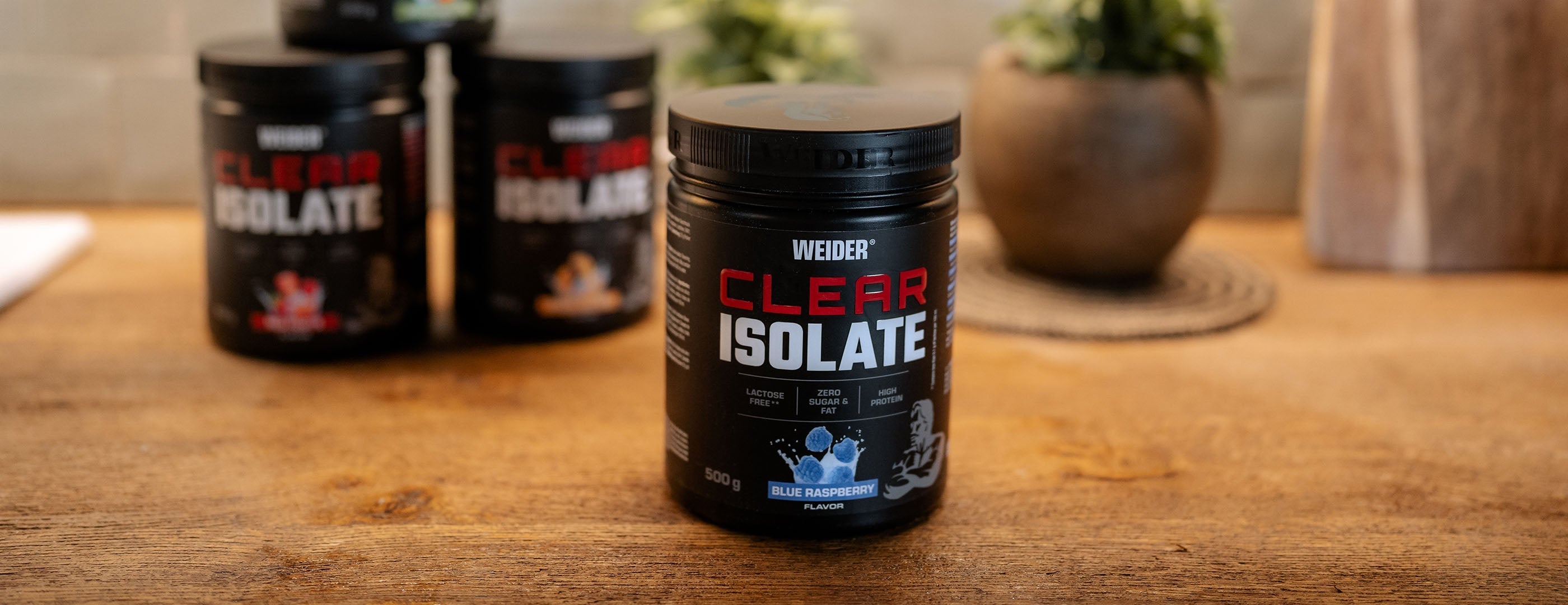
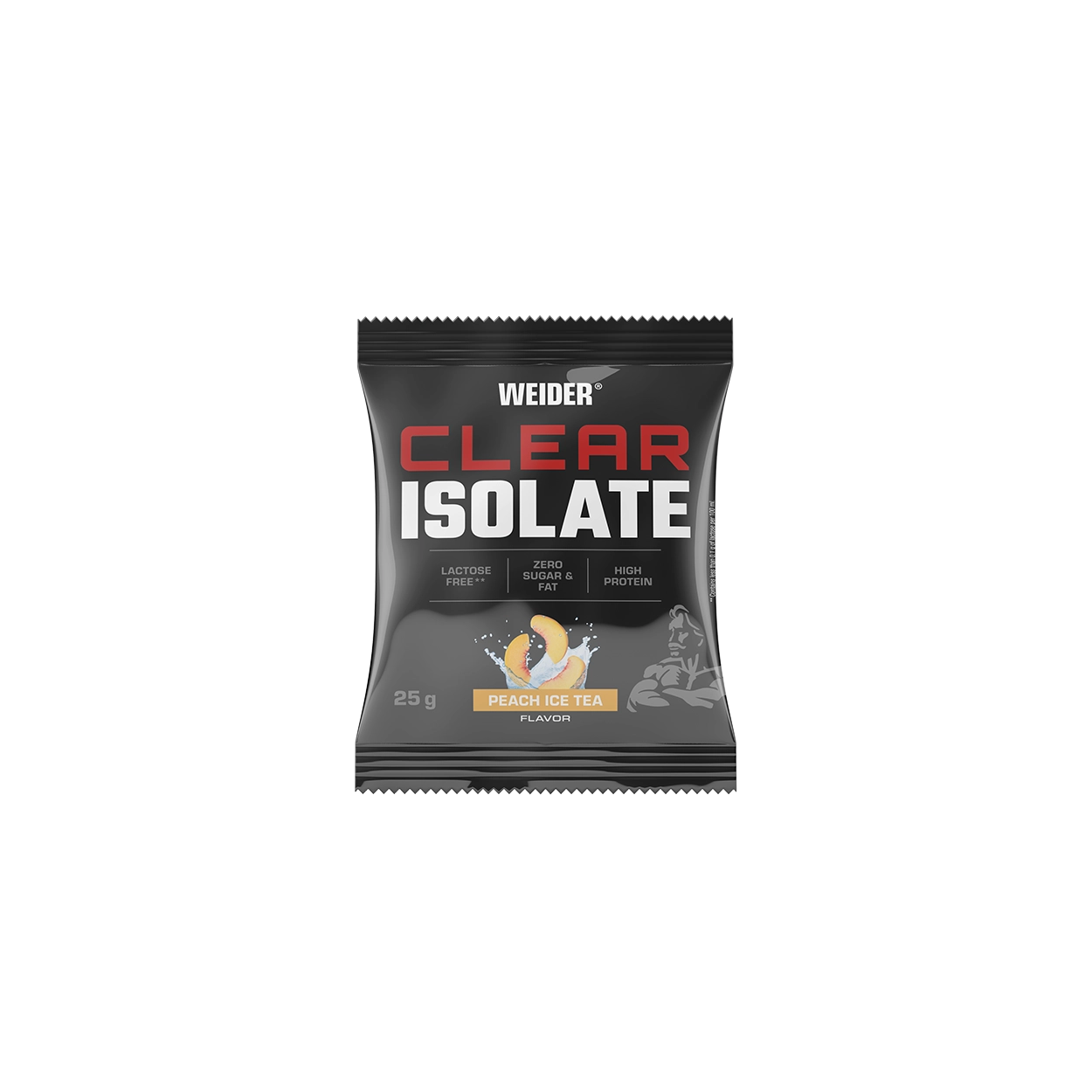
Today we're going to do a little whey education . Okay, admittedly the pun wasn't very good, but whatever – in this blog post we'll be looking at the basics of whey protein and also explaining why our new, outrageously delicious, fruity-fresh, irresistible (okay, enough self-praise for now...) Clear Isolate is so beautifully transparent.
Whey protein, as the name suggests, comes from whey, the aqueous phase of milk that is produced during cheese production.
The protein in milk consists of approximately 80% caseins and 20% whey proteins (a collective term for various protein fractions, such as lactoglobulin, alpha-lactalbumin, serum albumin, immunoglobulin, etc.).
During cheese production, the caseins are precipitated or "curdled" (either by (rennet) enzymes or acid). The aqueous whey is a by-product and is partially or completely removed, depending on the type of cheese. Fresh cheese, for example, has a high water content and therefore a higher whey content than hard cheese, which (depending on the variety) no longer contains any whey.
Whey, as the name suggests, contains whey proteins, but also the water-soluble milk sugar (lactose, a carbohydrate). Because hard cheese contains practically no whey, it consists only of protein and fat. The lactose is therefore (almost) completely removed during production.
This is also the reason why hard cheese is suitable for people with lactose intolerance (lack of enzyme activity to break down lactose – causes digestive problems).
The composition can be influenced by filtering the raw materials. For example, there is WPC 35 (whey protein concentrate with 35% protein in the dry matter) or the variant commonly used in our industry, WPC 80 (whey protein concentrate with 80% protein in the dry matter). The protein powders are produced from milk or its components (e.g., in this case, only whey) through drying processes.
Whey protein concentrate 80 (WPC 80) still contains small amounts of lactose and milk fat.
In whey protein isolate (WPI), the protein, as the name suggests, is further isolated, meaning that lactose and fat are largely removed during the "purification" process.
Many WPI raw materials are therefore almost lactose- and fat-free and contain approximately 90% protein in their dry matter. WPI is thus the purest form of whey protein.
But why are most whey isolates on the market milky and cloudy, while the clear isolate dissolves clearly?
To get to the bottom of this question, we need to take a short trip into physics, or rather optics.
Regular whey protein isolates still contain small amounts of fat and lactose, usually between 1-2% each.
Milk itself is an emulsion, more precisely a fat- or oil-in-water emulsion. In its original state, milk consists of approximately 87% water. Fats are nonpolar, meaning they have neither positively nor negatively charged sides, and therefore cannot dissolve in water.
In fresh milk, tiny fat droplets float in the water. Due to their lower density, these quickly rise to the surface, forming a layer of cream. To stabilize the milk and its emulsion, the milk is homogenized, which means the fat droplets are reduced to a uniform (homogeneous) size. Because these smaller fat droplets also have a smaller surface area, the emulsifiers naturally present in the milk can better encapsulate them and prevent them from coalescing back into larger droplets.
In addition, milk also contains proteins, lactose, vitamins and minerals.
When light falls on milk, some of it is reflected at the surface, while some passes through the milk and encounters the dissolved particles. As light passes through the milk, it interacts with the dissolved substances. The light is scattered, meaning it is deflected from its straight path. This scattering of light is what makes the milk appear cloudy.
The reflected light hits our retina, allowing us to perceive different colors depending on the wavelength of the light. In the case of milk, all wavelengths of the visible spectrum reach our retina, which is why it appears white to us. We perceive things as white that reflect light of all wavelengths.
But enough physics for now, we're not in advanced physics class here. Back to our clear isolate.
The fat content of the whey protein isolate raw material used has been reduced to an absolute minimum. 100 g of our Clear Isolate contains a mere 0.2 g of fat. Consequently, there are fewer fat droplets floating around in the shake that could scatter the light. Overall, the number of dissolved particles in the liquid is lower than in conventional whey shakes due to the product's high purity. Therefore, more light penetrates the liquid, and the Clear Isolate shake appears clear.
Clear whey protein shakes are very popular because, unlike the standard milk-based flavors of vanilla, chocolate and strawberry, they are even lighter and offer plenty of variety with their fruity taste.
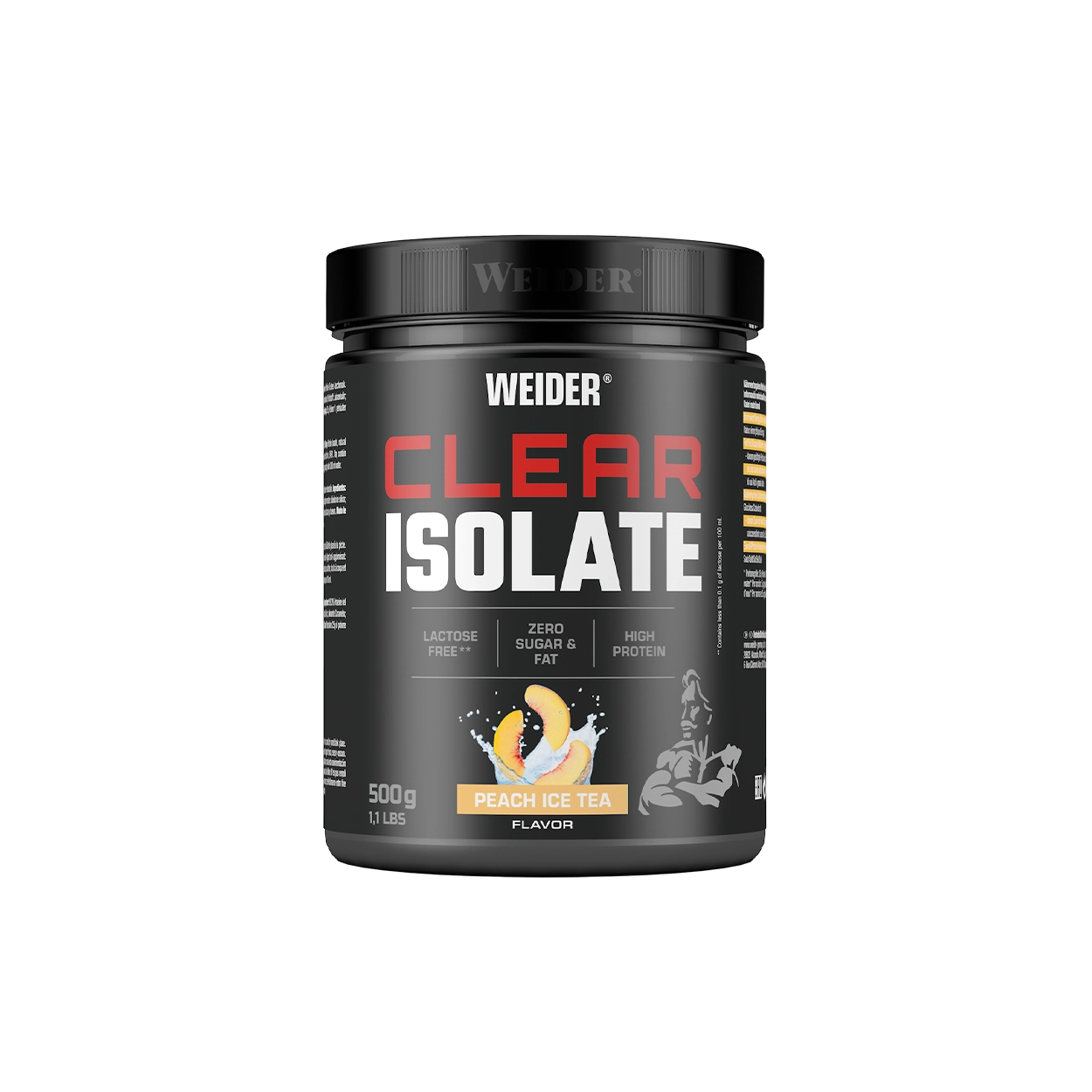
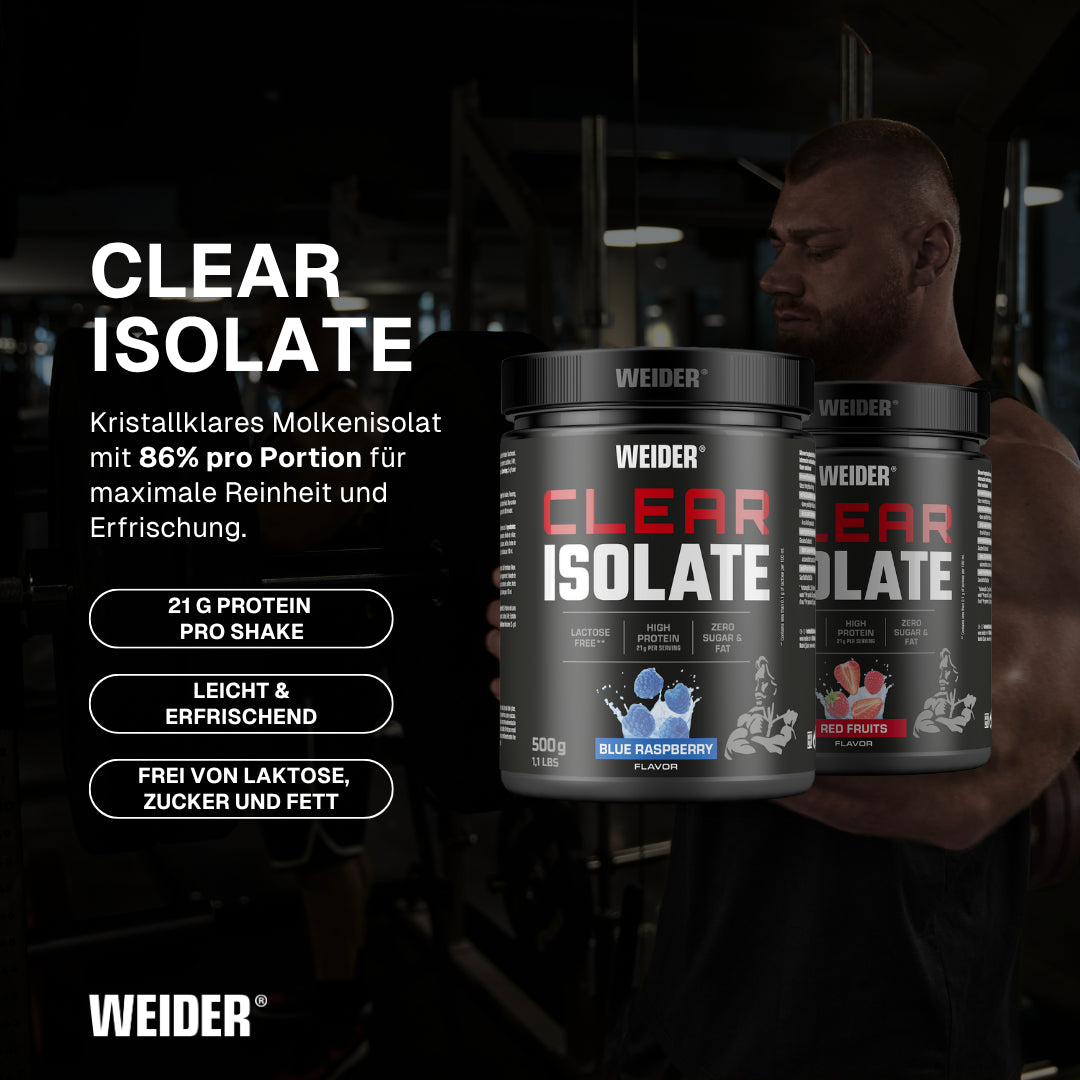
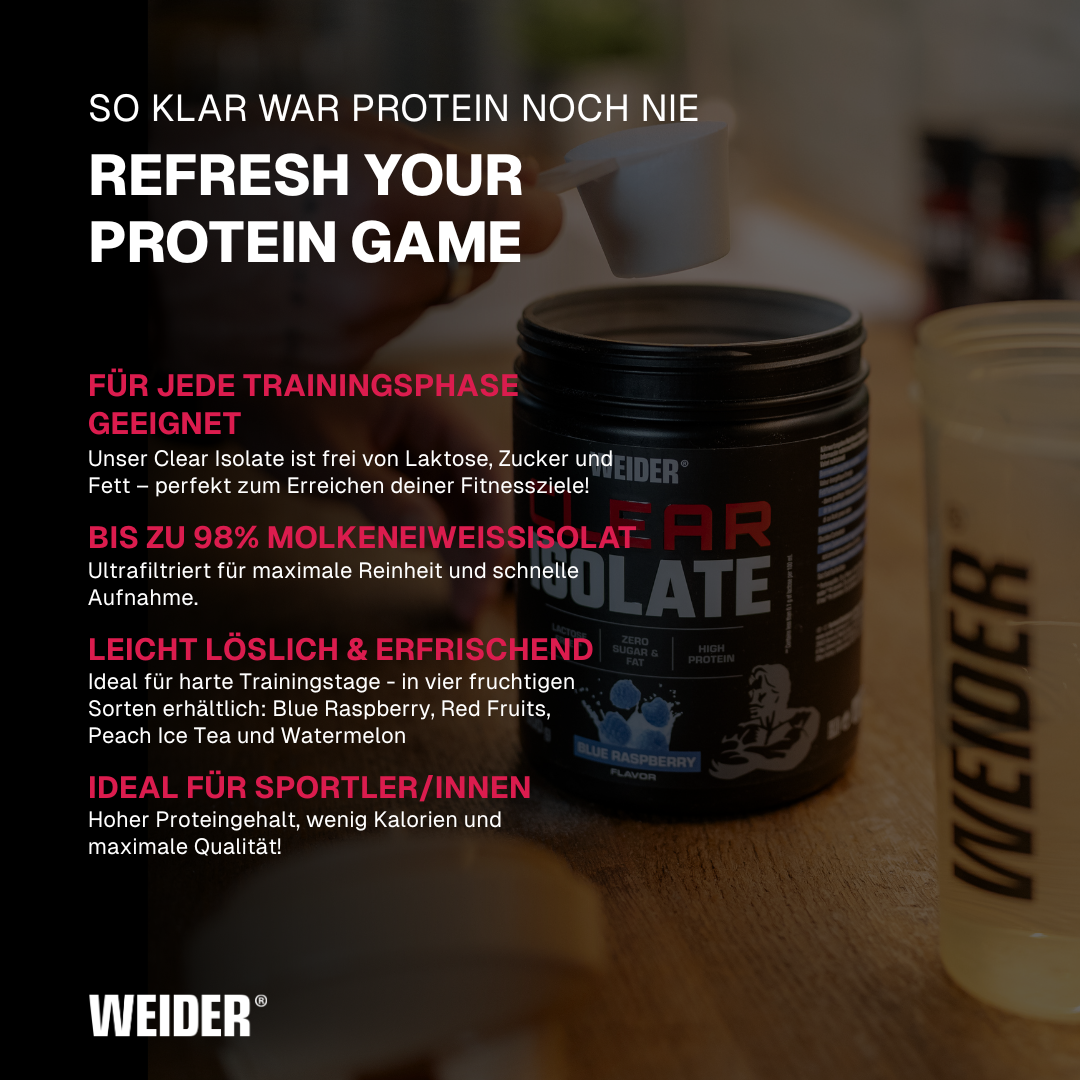
Our delicious Clear Whey stands out not only for its outstanding nutritional values but also for its refreshing, soft drink-like taste. With four delicious flavors – Blue Raspberry, Red Fruits, Peach Ice Tea, and Watermelon – there's something for everyone.
In that spirit, raise your shakers and cheers!



Share:
What happens if I take boosters?
Prejudices against protein? We're here to educate!